Dubverse
Dubverse handled the fitness MP4 end-to-end and produced a usable Hindi dub, but the voice was less energetic than the original and fast instructions were not perfectly synced.
e120792604b24c0ab8fe30690529029b.mp4
If you need to turn an existing video into another language without re-filming, the winning tool has to preserve meaning, sound like the original speaker, and keep the lips believable. We tested real fitness, educational, and vlog-style clips across English→Hindi, English→Spanish, and Hindi→English to compare translation accuracy, voice match, lip sync, pacing, and export quality.
Reliable end-to-end dubbing for clear educational content, with weaker energy match on faster or more informal speech.
It can line up speech well on the clean educational clip, but faster or more casual speech exposes timing drift. Because one test was good and one was clearly weak, this lands in the middle.
We rank on the 3 checks that decide whether a tool does this job: Lip Sync Accuracy, Translation Accuracy, Voice Cloning Quality. A check only carries a score when we recorded a finding for it, and a tool has to be measured on all of them to take the top spot. We also checked Automation Level, Input Handling, Output Quality & Export — compared for you, but not part of the ranking.
Columns, left to right: Lip Sync Accuracy · Translation Accuracy · Voice Cloning Quality
Ranking rule: tools measured on every decisive check rank above tools missing any, whatever their score. Synthesia skipped Voice Cloning Quality (scores 3 on the checks it ran); AKOOL skipped Voice Cloning Quality (scores 2.5 on the checks it ran); CAMB.AI skipped Voice Cloning Quality (scores 1 on the checks it ran); Rask AI skipped Voice Cloning Quality (scores 1 on the checks it ran); HeyGen skipped Voice Cloning Quality (scores 1 on the checks it ran).
Pick the tools you care about, then compare what they returned or how they scored.
Dubverse handled the fitness MP4 end-to-end and produced a usable Hindi dub, but the voice was less energetic than the original and fast instructions were not perfectly synced.
e120792604b24c0ab8fe30690529029b.mp4
The fitness clip went through after a manual upload, and the Hindi translation, dubbing, and lip sync were usable, but the voice still sounded a bit artificial and export on the free plan was restricted.
855a96949c7f487784b76fd99a758dcb.mp4
It translated the spoken dialogue into Hindi and kept the clip technically intact, but the quiz graphics stayed in English, the subtitles overlapped, and the lips never moved to match the new audio.
4802f98e7e3d4497a8312c8238c50d9d.mp4
It produced a strong Hindi voice for the fitness clip, but the workflow started with manual transcription, there was no lip sync, and the exported video was not clean because of the watermark.
f06ae0bd183d48fe8368c15db83f1951.mp4
It turned the fitness clip into an avatar-style Hindi result with understandable translation and clear audio, but it needed manual setup and did not work on the original live-action video, so it was not a true direct dubbing workflow.
Written result only
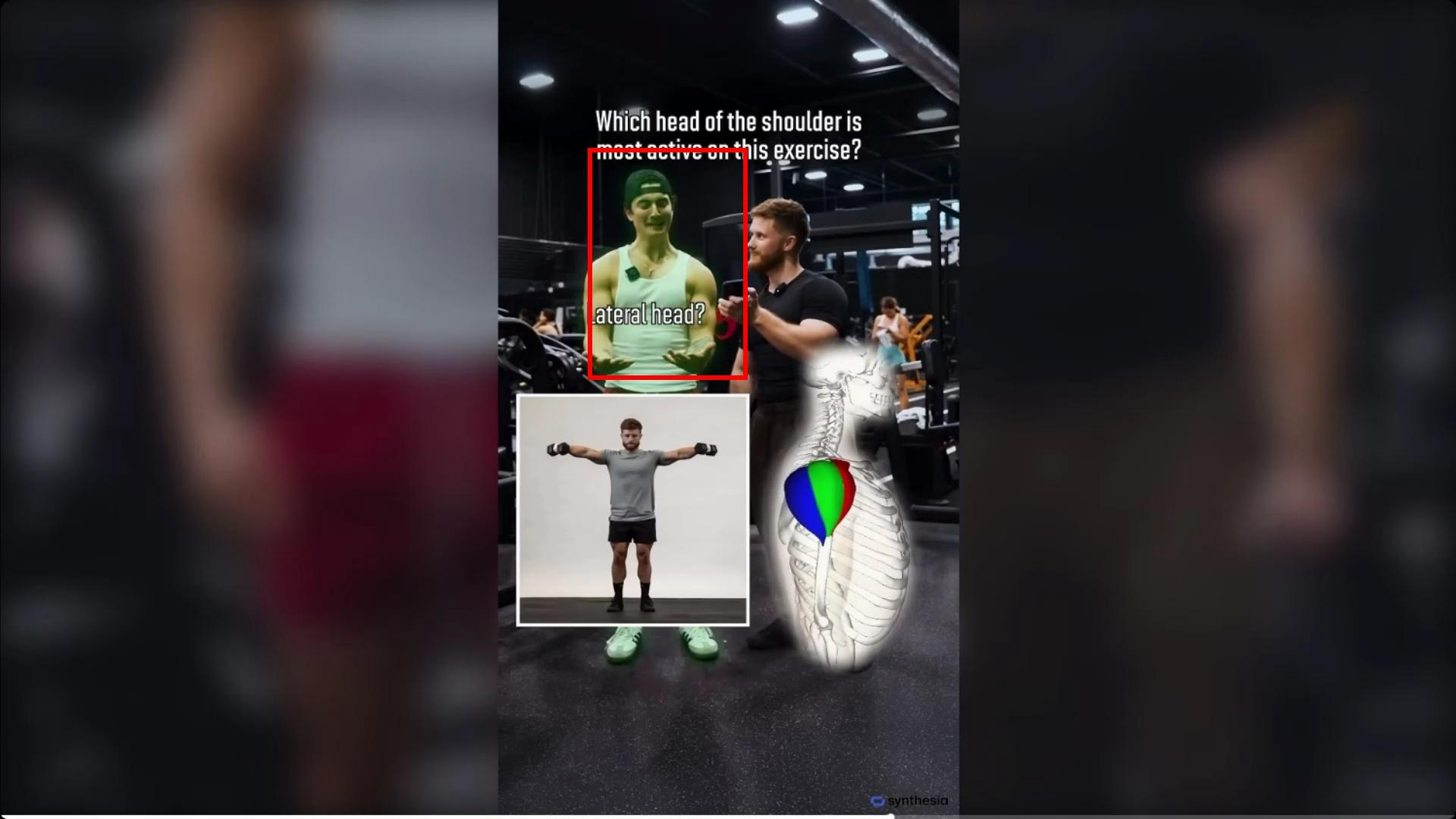
The fitness upload went through, but the Hindi result never actually translated the captions and the clip developed a bright green body-and-shirt compositing glitch, so the end result was not usable as a proper dubbed version.
f5430a65f63c4cbc925faec0e343264c.png
It accepted the fitness video and completed the workflow, but the result had a bright green body tint, a stray white "9," a visible drop to 404×720, and untranslated English captions in the output.
0fa442f1468a4d4b929c91434ed7005f.mp4
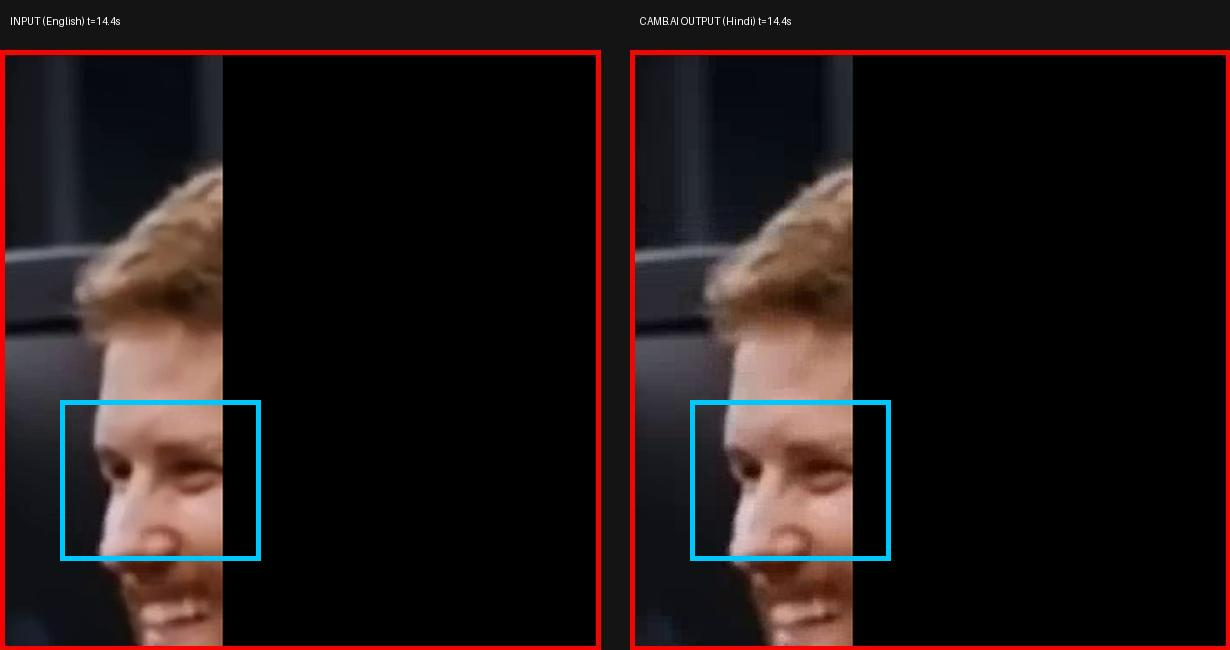
It produced a clean downloadable MP4 of the fitness clip, but the English captions stayed untranslated and the mouth region did not change, so the English→Hindi dub is effectively audio-only.
030c2c642aaf4cbcaf831203037b0307.png
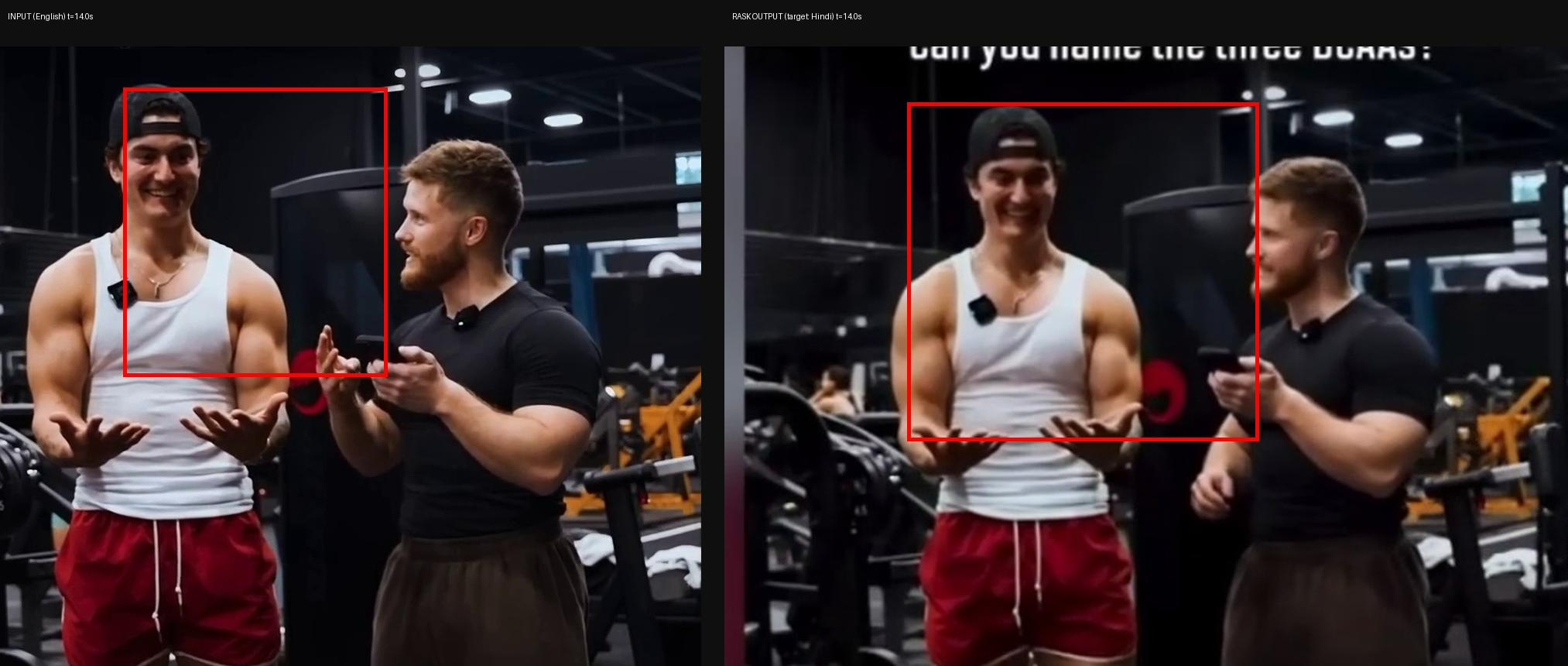
It produced a clean fitness export, but the on-screen English text stayed untranslated and the video never gained lip sync on this free-tier run.
d25fee8e34384325bb199ac609c44259.png
HeyGen produced a clean, playable gym clip, but the spoken Hindi dubbing could not be verified, the face stayed visually unchanged at the matched moment, and the burned-in English captions were not localized.
b1a4b4b2cfb445c0a5e3dbd6c25891ec.mp4
All 6 recorded checks per tool. Open a tool to inspect every finding.
It can line up speech well on the clean educational clip, but faster or more casual speech exposes timing drift. Because one test was good and one was clearly weak, this lands in the middle.
Lip sync is the weakest of the three tests, with sync inconsistencies and slightly off audio-video alignment in fast speech.
permalink to this finding →Lip sync is good for slow to medium speech, but the report says it shows a slight delay in fast instruction segments.
permalink to this finding →Lip sync is described as more precise than on the other inputs.
permalink to this finding →Lip sync is good on some inputs, described as more precise in one case and good for slow to medium speech, but it becomes weaker on fast speech with slight delay, sync inconsistencies, and slightly off audio-video alignment.
permalink to this finding →Dubverse is the overall winner because it is the page’s #1 and it is fully measured on all three decisive checks: 3.0/5.0 for lip sync, 4.0/5.0 for translation, and 3.0/5.0 for voice cloning. It looks like the best all-around fit for clear, structured educational videos, but it is not the strongest choice for casual Hindi vlog-style speech or more expressive fitness-style delivery. Sync Labs is the closest alternative on the decisive checks — it posts the same 3.0/5.0, 4.0/5.0, 3.0/5.0 profile — but it is held back by manual ingest and weaker export quality, so it is the better pick only if you can live with those workflow limits. ElevenLabs stands out for voice generation quality, but its 1.0/5.0 lip sync and weak automation/input handling show it is not really an end-to-end video dubbing tool. D-ID is more for avatar-style multilingual dubbing than for direct real-video translation or original-face lip sync, since its lip sync is 1.0/5.0 even though translation is 4.0/5.0. Among the partly tested tools, Synthesia has the strongest lip sync at 4.0/5.0, but its translation is only 2.0/5.0 and it is still partly tested by policy. Akool also looks strong on lip sync at 4.0/5.0, but translation is only 1.0/5.0 and the card notes untranslated text and watermarked exports. Camb.AI and Rask AI both lack lip sync, and HeyGen’s free-tier behavior is closer to caption replacement than visible dubbing or lip sync. VEED.io has no decisive-check results shown here, so there is not enough evidence to place it above the measured tools.
The tools we tested for this use case — each card opens its full tested review.
If you are looking to build a custom video translation, voice cloning, or lip sync localization workflow for your business or internal workflow, email us at contact@futuresmart.ai.
Found something inaccurate or missing? We try to keep our AI research accurate and useful. If you found outdated information, an issue, or have a suggestion, email us at collaborate@aidemos.com.
Comments (0)