Quiz Generation
Version 1No published result

Bloom/DOK-tagged quizzes and printable study exports from source material, but not a real self-testing loop.
Strong for teacher-made study assets; weak as a self-testing app
QuestionWell is strongest as a teacher-facing question authoring tool: it generates Bloom/DOK-tagged questions, discussion prompts, worksheets, PDFs, and flashcard exports from PDFs and transcript-based material. But it is not a real self-testing loop — answers show with questions, and the study-over-time claims were not independently artifact-backed in this run.
Explore QuestionWell in our public benchmarks.
No published result
Our detailed analysis of QuestionWell — features, performance, and real-world testing.
Feature tested: Question Generation from Source Material
Result: Failed
Expected behavior: QuestionWell turns source material into question sets from multiple input formats. In the run it worked on a typed NCERT biology PDF, scanned handwritten notes, and a pasted Hindi transcript after a YouTube URL failed, producing discussion, fill-in-the-blank, true/false, and very short answer items.
Test case: PDF document → Image
Input type: PDF document
Input used: Input artifact (PDF document): Primary study PDF — input1_primary.pdf
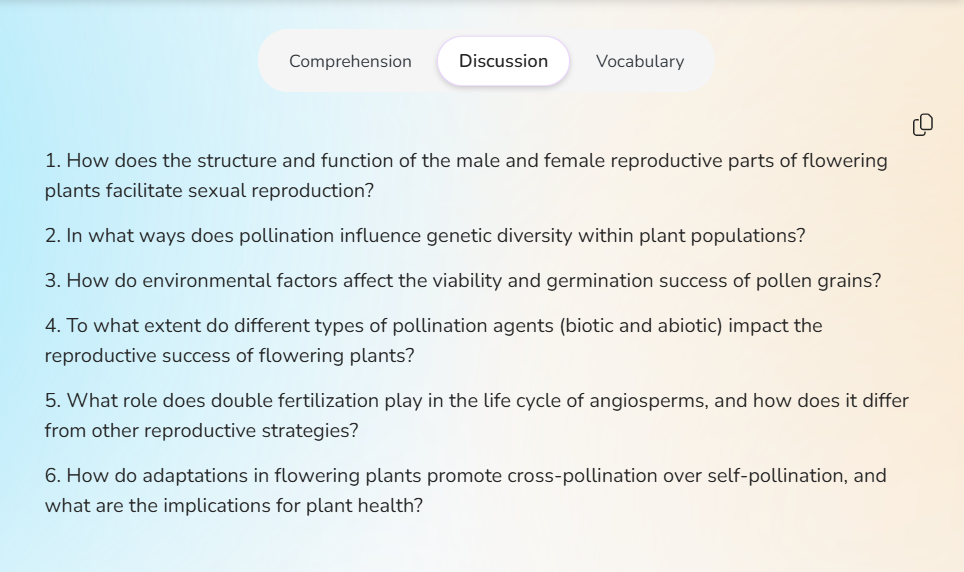
Observed output: Output artifact (Image): Six open-ended discussion prompts on sexual reproduction in flowering plants, pollination, environmental effects on pollen, pollination agents, double fertilization, and cross-pollination. — out1_discussion_questions.png
Input artifact: Input artifact (PDF document): Primary study PDF — input1_primary.pdf
Output artifact: Output artifact (Image): Six open-ended discussion prompts on sexual reproduction in flowering plants, pollination, environmental effects on pollen, pollination agents, double fertilization, and cross-pollination. — out1_discussion_questions.png
What changed: PDF document transformed into Image
Test case: PDF document → Text prompt
Input type: PDF document
Input used: Input artifact (PDF document): Scanned handwritten biology notes from the same chapter. — input2_secondary.pdf
Observed output: Output artifact (Text prompt): Output
Input artifact: Input artifact (PDF document): Scanned handwritten biology notes from the same chapter. — input2_secondary.pdf
Output artifact: Output artifact (Text prompt): Output
What changed: PDF document transformed into Text prompt
Test case: YouTube video → Image
Input type: YouTube video
Input used: Input artifact (YouTube video): Input
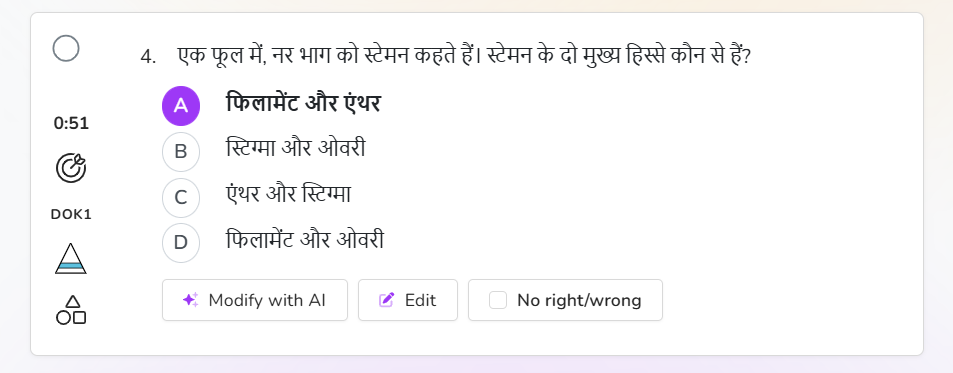
Observed output: Output artifact (Image): The transcript-paste run yielded a mixed-language MCQ screen with scrambled numbering; one Hindi question about stamen parts is visible. — out3_hindi_mcq.png
Input artifact: Input artifact (YouTube video): Input
Output artifact: Output artifact (Image): The transcript-paste run yielded a mixed-language MCQ screen with scrambled numbering; one Hindi question about stamen parts is visible. — out3_hindi_mcq.png
What changed: YouTube video transformed into Image
Test case: PDF document → Image
Input type: PDF document
Input used: Input artifact (PDF document): Primary study PDF — input1_primary.pdf
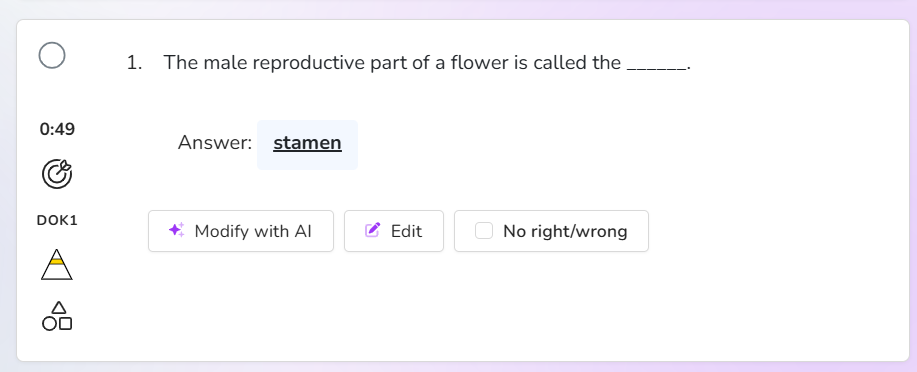
Observed output: Output artifact (Image): Fill-in-the-blank item identifying stamen as the male reproductive part of a flower, with the answer shown immediately and DOK1 visible. — out1_fillinblanks.png
Input artifact: Input artifact (PDF document): Primary study PDF — input1_primary.pdf
Output artifact: Output artifact (Image): Fill-in-the-blank item identifying stamen as the male reproductive part of a flower, with the answer shown immediately and DOK1 visible. — out1_fillinblanks.png
What changed: PDF document transformed into Image
Test case: PDF document → Image
Input type: PDF document
Input used: Input artifact (PDF document): Primary study PDF — input1_primary.pdf
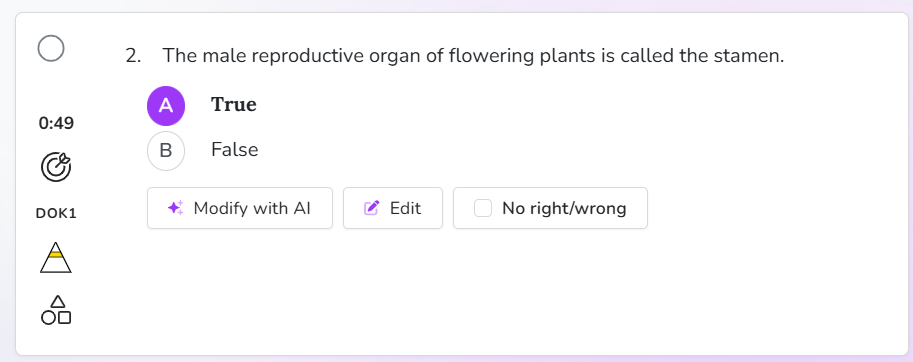
Observed output: Output artifact (Image): True/False item stating the male reproductive organ of flowering plants is called the stamen, with True selected and the answer visible on the same card. — out1_trufalse_answers.png
Input artifact: Input artifact (PDF document): Primary study PDF — input1_primary.pdf
Output artifact: Output artifact (Image): True/False item stating the male reproductive organ of flowering plants is called the stamen, with True selected and the answer visible on the same card. — out1_trufalse_answers.png
What changed: PDF document transformed into Image
Test case: PDF document → Image
Input type: PDF document
Input used: Input artifact (PDF document): Primary study PDF — input1_primary.pdf
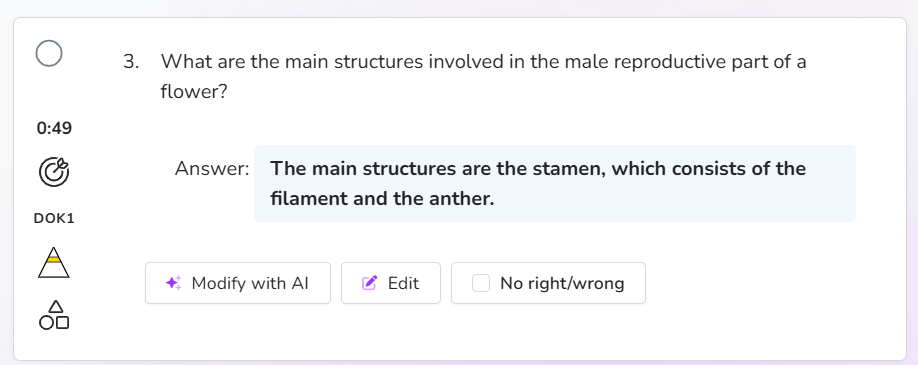
Observed output: Output artifact (Image): Very short answer item asking for the main structures involved in the male reproductive part of a flower, answered with stamen, filament, and anther. — out1_veryshortanswer.png
Input artifact: Input artifact (PDF document): Primary study PDF — input1_primary.pdf
Output artifact: Output artifact (Image): Very short answer item asking for the main structures involved in the male reproductive part of a flower, answered with stamen, filament, and anther. — out1_veryshortanswer.png
What changed: PDF document transformed into Image
Why it matters / Conclusion: Strong on typed PDFs, usable but weaker on handwritten notes, and unreliable for direct YouTube ingestion.
QuestionWell turns source material into question sets from multiple input formats. In the run it worked on a typed NCERT biology PDF, scanned handwritten notes, and a pasted Hindi transcript after a YouTube URL failed, producing discussion, fill-in-the-blank, true/false, and very short answer items.
Feature tested: Bloom/DOK Question Calibration
Result: Passed
Expected behavior: QuestionWell can label generated questions with Bloom's Taxonomy and DOK and surface more demanding modes such as Discussion and Bloom-labeled short answer. The research saw Discussion items that were more analytical than recall-level items, though some comprehension questions stayed shallow.
Test case: PDF document → Image
Input type: PDF document
Input used: Input artifact (PDF document): Typed PDF chapter on sexual reproduction in flowering plants. — input1_primary.pdf
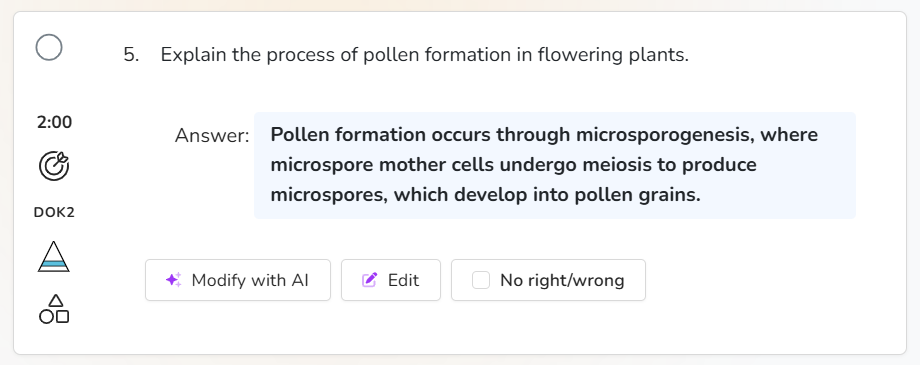
Observed output: Output artifact (Image): Short-answer card shows Bloom's Taxonomy and DOK tagging alongside a generated answer about pollen formation in flowering plants. — out1_shortanswer_blooms.png
Input artifact: Input artifact (PDF document): Typed PDF chapter on sexual reproduction in flowering plants. — input1_primary.pdf
Output artifact: Output artifact (Image): Short-answer card shows Bloom's Taxonomy and DOK tagging alongside a generated answer about pollen formation in flowering plants. — out1_shortanswer_blooms.png
What changed: PDF document transformed into Image
Test case: PDF document → Image
Input type: PDF document
Input used: Input artifact (PDF document): Typed PDF chapter on sexual reproduction in flowering plants. — input1_primary.pdf
Observed output: Output artifact (Image): Discussion mode produced open-ended, inferential questions about sexual reproduction, pollination, double fertilization, and cross-pollination. — out1_discussion_questions.png
Input artifact: Input artifact (PDF document): Typed PDF chapter on sexual reproduction in flowering plants. — input1_primary.pdf
Output artifact: Output artifact (Image): Discussion mode produced open-ended, inferential questions about sexual reproduction, pollination, double fertilization, and cross-pollination. — out1_discussion_questions.png
What changed: PDF document transformed into Image
Why it matters / Conclusion: A real differentiator for educators and the clearest quality signal in the research, but it does not make every question deep by default.
QuestionWell can label generated questions with Bloom's Taxonomy and DOK and surface more demanding modes such as Discussion and Bloom-labeled short answer. The research saw Discussion items that were more analytical than recall-level items, though some comprehension questions stayed shallow.
Feature tested: Printable Study Export
Result: Passed
Expected behavior: QuestionWell can export generated study material into printable formats. The research verified PDF export and a large worksheet export from the biology chapter for offline study packets and teacher handouts.
Test case: PDF document → PDF document
Input type: PDF document
Input used: Input artifact (PDF document): Typed PDF chapter on sexual reproduction in flowering plants. — input1_primary.pdf
Observed output: Output artifact (PDF document): The generated MCQ set was exported as a PDF. — out1_mcq_export.pdf
Input artifact: Input artifact (PDF document): Typed PDF chapter on sexual reproduction in flowering plants. — input1_primary.pdf
Output artifact: Output artifact (PDF document): The generated MCQ set was exported as a PDF. — out1_mcq_export.pdf
What changed: PDF document transformed into PDF document
Test case: PDF document → PDF document
Input type: PDF document
Input used: Input artifact (PDF document): Typed PDF chapter on sexual reproduction in flowering plants. — input1_primary.pdf
Observed output: Output artifact (PDF document): A 91-page worksheet export was generated from the same biology PDF input. — out1_worksheet_export.pdf
Input artifact: Input artifact (PDF document): Typed PDF chapter on sexual reproduction in flowering plants. — input1_primary.pdf
Output artifact: Output artifact (PDF document): A 91-page worksheet export was generated from the same biology PDF input. — out1_worksheet_export.pdf
What changed: PDF document transformed into PDF document
Why it matters / Conclusion: One of QuestionWell's strongest verified capabilities in this report, especially for teachers who want offline study materials.
QuestionWell can export generated study material into printable formats. The research verified PDF export and a large worksheet export from the biology chapter for offline study packets and teacher handouts.
Feature tested: Vocabulary Extraction and Flashcard Creation
Result: Passed
Expected behavior: QuestionWell's Vocabulary workflow extracts key terms from source material and turns them into study assets. In the captured run it selected terms such as Flower, Stamen, Pollen, and Ovule, and it also exported a flashcard PDF from that workflow.
Test case: PDF document → Image
Input type: PDF document
Input used: Input artifact (PDF document): Vocabulary source from uploaded material — input1_primary.pdf
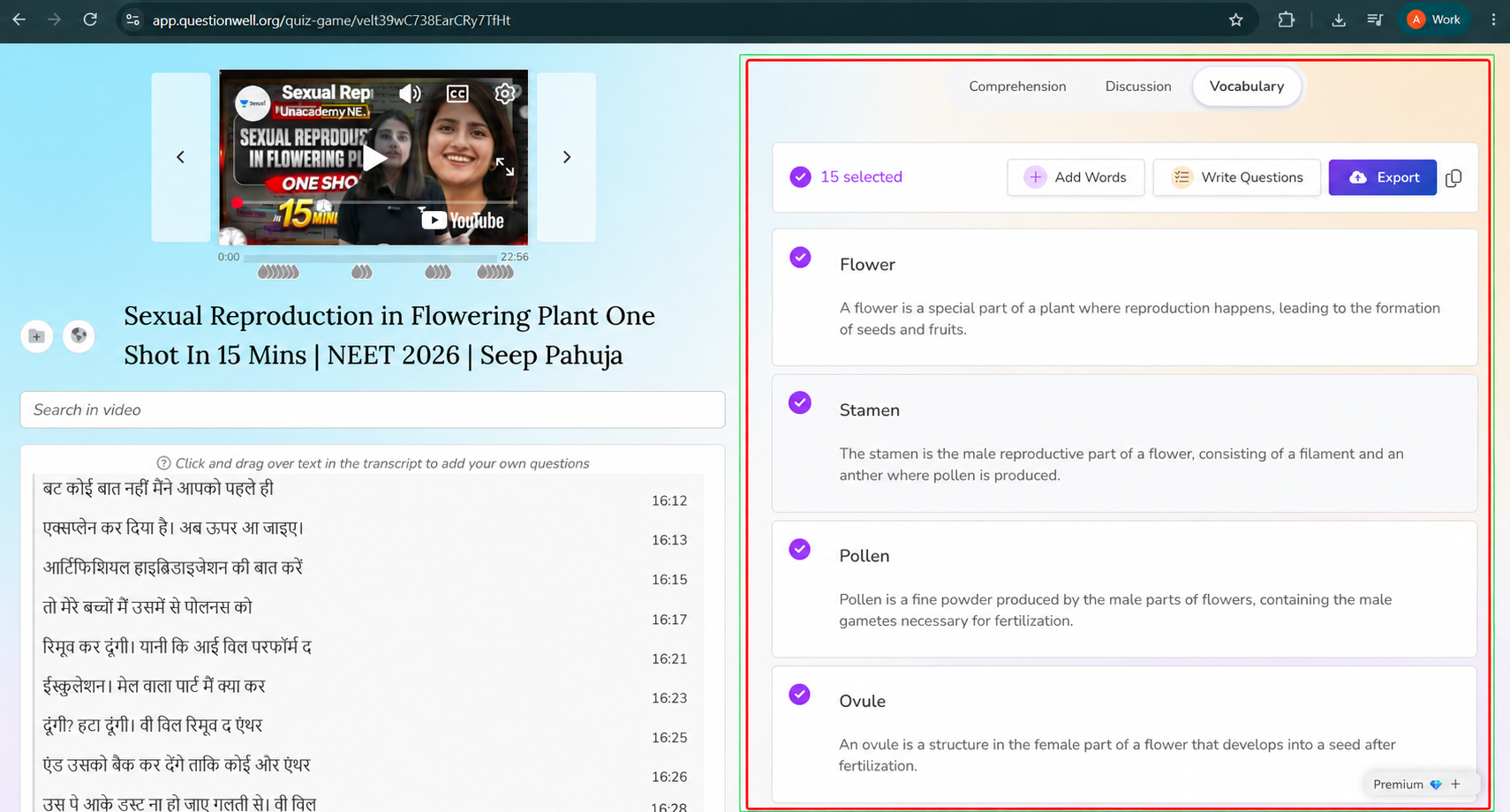
Observed output: Output artifact (Image): QuestionWell quiz editor with the Vocabulary tab open, showing 15 selected terms, definition cards for Flower, Stamen, Pollen, and Ovule, and Add Words / Write Questions / Export controls. — out_vocabulary_export.png
Input artifact: Input artifact (PDF document): Vocabulary source from uploaded material — input1_primary.pdf
Output artifact: Output artifact (Image): QuestionWell quiz editor with the Vocabulary tab open, showing 15 selected terms, definition cards for Flower, Stamen, Pollen, and Ovule, and Add Words / Write Questions / Export controls. — out_vocabulary_export.png
What changed: PDF document transformed into Image
Test case: Text prompt → PDF document
Input type: Text prompt
Input used: Input artifact (Text prompt): Input
Observed output: Output artifact (PDF document): Vocabulary from the transcript-based lecture workflow was exported as a flashcard PDF. — out3_youtube_flashcard.pdf
Input artifact: Input artifact (Text prompt): Input
Output artifact: Output artifact (PDF document): Vocabulary from the transcript-based lecture workflow was exported as a flashcard PDF. — out3_youtube_flashcard.pdf
What changed: Text prompt transformed into PDF document
Why it matters / Conclusion: Useful as a secondary study-asset generator, with the vocabulary view and flashcard export both verified.
QuestionWell's Vocabulary workflow extracts key terms from source material and turns them into study assets. In the captured run it selected terms such as Flower, Stamen, Pollen, and Ovule, and it also exported a flashcard PDF from that workflow.
Independent rankings where QuestionWell was tested and rated.
How the embed badge will look on your site

Copy this code to your website source
Discover more AI tools like QuestionWell to enhance your workflow.
If you are looking to build a custom quiz generation, study guide creation, or assessment authoring tool for your business or internal workflow, email us at contact@futuresmart.ai.
Found something inaccurate or missing? We try to keep our AI research accurate and useful. If you found outdated information, an issue, or have a suggestion, email us at collaborate@aidemos.com.